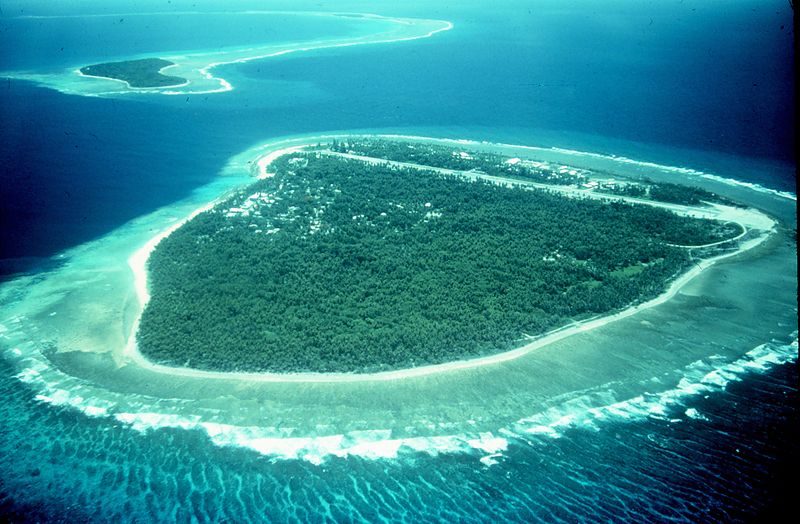
Since their emergence 485 million years ago, coral reefs have faced many threats, including disease,predation,invasive species, bioerosion by grazing fish,algal blooms, and geologic hazards. Recent human activities present new threats. From 2009 to 2018, coral reefs worldwide declined 14%. Human activities that threaten coral include coral mining, bottom trawling,and the digging of canals and accesses into islands and bays, all of which can damage marine ecosystems if not done sustainably. Other localized threats include blast fishing, overfishing, coral overmining,and marine pollution, including use of the banned anti-fouling biocide tributyltin; although absent in developed countries, these activities continue in places with few environmental protections or poor regulatory enforcement. Chemicals in sunscreens may awaken latent viral infections in zooxanthellae and impact reproduction.However, concentrating tourism activities via offshore platforms has been shown to limit the spread of coral disease by tourists.
Greenhouse gas emissions present a broader threat through sea temperature rise and sea level rise,though corals adapt their calcifying fluids to changes in seawater pH and carbonate levels and are not directly threatened by ocean acidification.Volcanic and manmade aerosol pollution can modulate regional sea surface temperatures. In 2011, two researchers suggested that "extant marine invertebrates face the same synergistic effects of multiple stressors" that occurred during the end-Permian extinction, and that genera "with poorly buffered respiratory physiology and calcareous shells", such as corals, were particularly vulnerable.
Corals respond to stress by "bleaching," or expelling their colorful zooxanthellate endosymbionts. Corals with Clade C zooxanthellae are generally vulnerable to heat-induced bleaching, whereas corals with the hardier Clade A or D are generally resistant,as are tougher coral genera like Porites and Montipora.Every 4–7 years, an El Niño event causes some reefs with heat-sensitive corals to bleach,with especially widespread bleachings in 1998 and 2010.However, reefs that experience a severe bleaching event become resistant to future heat-induced bleaching, due to rapid directional selection.Similar rapid adaption may protect coral reefs from global warming.